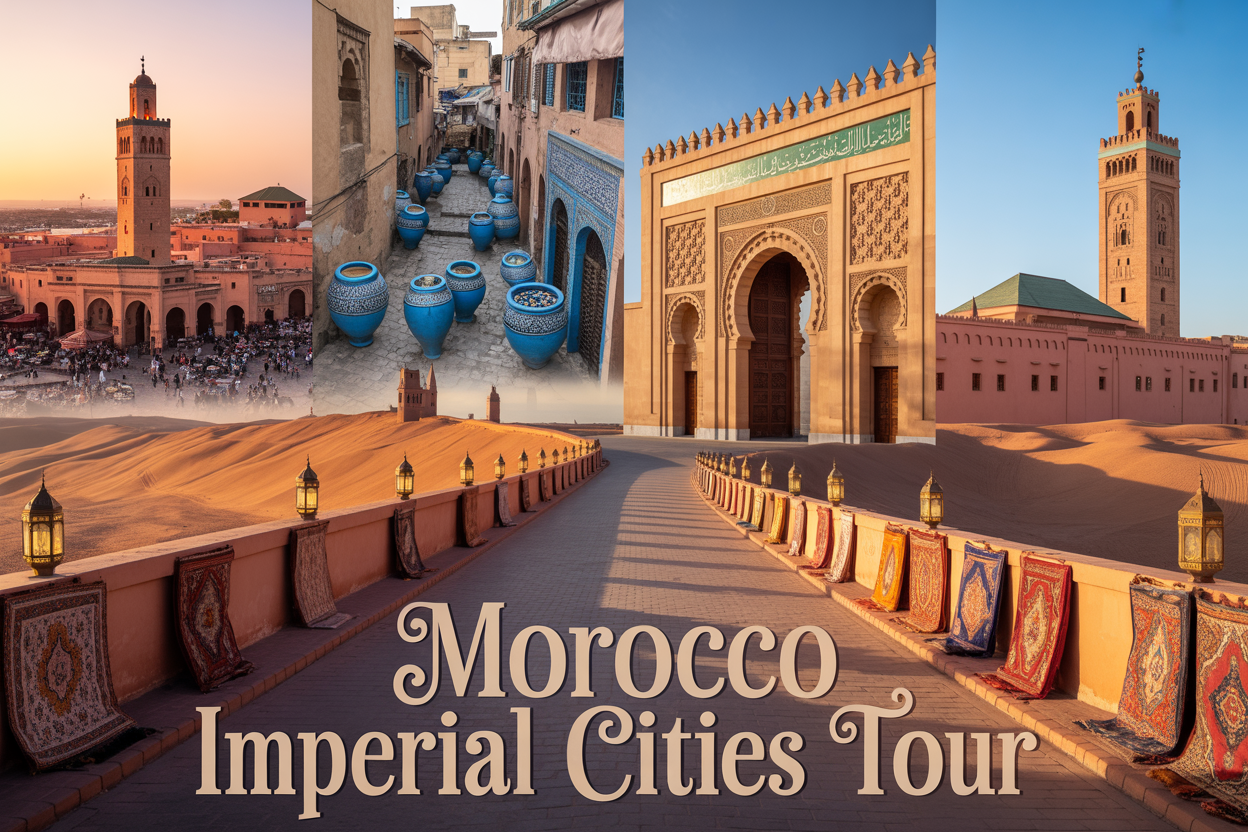
Morocco’s Imperial Cities Tour takes you through four legendary destinations that shaped the country’s royal history – Marrakech, Fes, Meknes, and Rabat. This journey is perfect for history enthusiasts, cultural travelers, and anyone wanting to experience Morocco’s most significant cities in one unforgettable trip.
Each imperial city tells a unique story of Moroccan dynasties and offers distinct experiences you won’t find anywhere else. You’ll discover Marrakech’s vibrant souks and stunning palaces that earned it the nickname “Red City.” Fes will immerse you in authentic Moroccan culture with its ancient medina and world-renowned tanneries. Meknes surprises visitors as an underrated gem with impressive gates and peaceful gardens, while Rabat balances modern political importance with historical treasures.
We’ll walk you through planning your multi-city adventure and share insider tips for making the most of your time in each destination.
Planning Your Imperial Cities Adventure
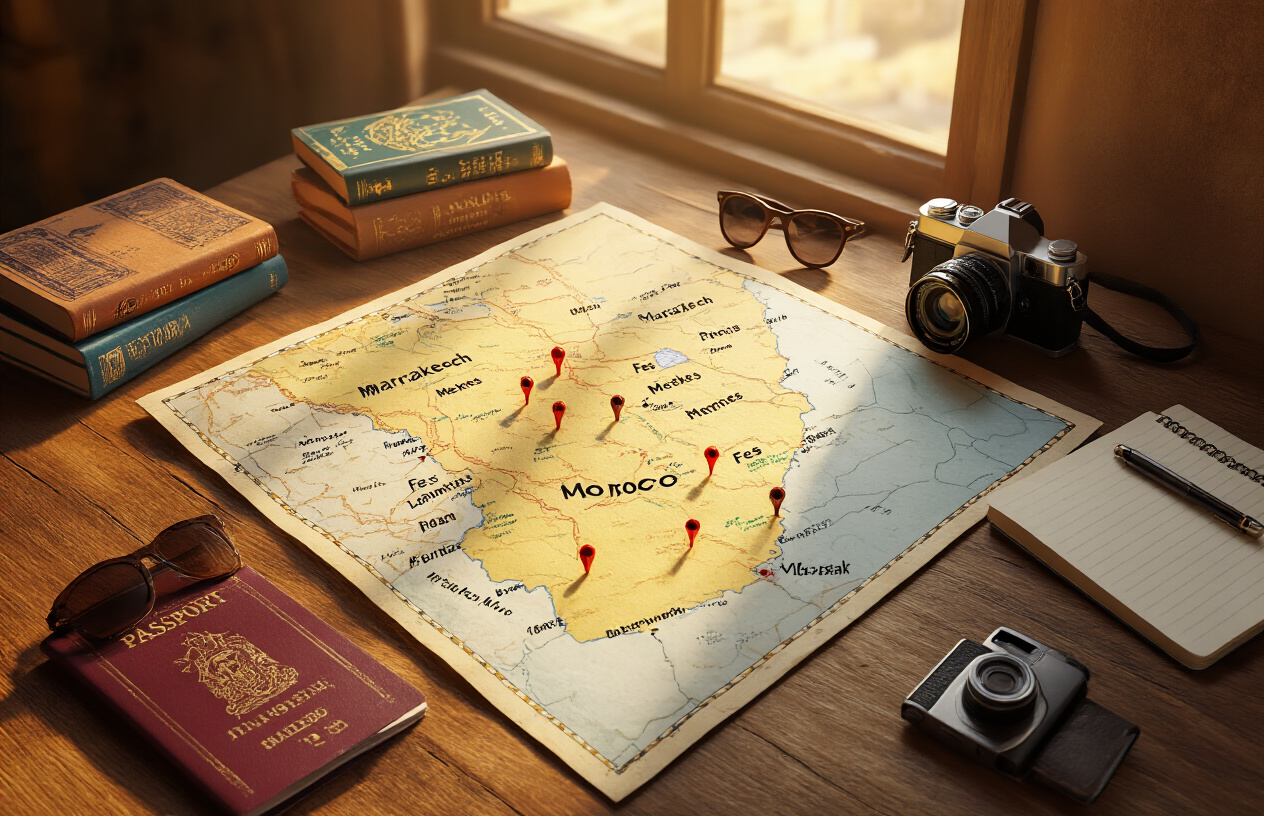
Best Time to Visit Morocco’s Four Royal Capitals
Morocco offers year-round travel opportunities, but timing your imperial cities tour can make a significant difference in your experience. Spring (March to May) and fall (September to November) provide the most comfortable weather conditions, with mild temperatures averaging 65-75°F during the day and cool evenings perfect for exploring medinas and outdoor dining.
Summer months (June to August) bring intense heat, particularly in Marrakech and Fes, where temperatures often exceed 100°F. However, this season offers longer daylight hours and fewer crowds at major attractions. If you visit during summer, plan indoor activities during midday and save outdoor exploration for early morning and evening.
Winter (December to February) presents cooler temperatures and occasional rain, making it ideal for those who prefer milder weather. Marrakech and Rabat remain pleasant during winter months, while Fes and Meknes can become quite chilly, especially at night.
Ramadan timing varies each year and significantly affects daily rhythms. Many restaurants close during daylight hours, and some attractions have modified schedules. Consider this when planning your visit, as it provides unique cultural insights but may limit dining options.
Essential Documents and Visa Requirements
Most visitors from the United States, Canada, European Union, Australia, and many other countries can enter Morocco visa-free for stays up to 90 days. Your passport must remain valid for at least six months beyond your planned departure date from Morocco.
Upon arrival, you’ll receive an entry stamp and should keep your passport accessible throughout your stay, as hotels and some attractions require identification. No special vaccinations are mandatory for Morocco, though routine immunizations should be current.
Travel insurance isn’t required but strongly recommended, covering medical emergencies and trip interruptions. Many insurance providers offer specific coverage for Morocco, including protection for adventure activities like camel trekking or hiking in the Atlas Mountains.
Consider bringing multiple copies of important documents, storing them separately from originals. Digital copies saved to cloud storage provide additional backup security.
Recommended Tour Duration and Itinerary Options
A comprehensive imperial cities tour requires a minimum of 7-10 days to experience each city meaningfully. The classic itinerary allocates 2-3 days per city, allowing for both major attractions and spontaneous discoveries.
7-Day Classic Route:
-
Days 1-2: Marrakech (Jemaa el-Fnaa, Majorelle Gardens, Bahia Palace)
-
Days 3-4: Fes (Medina exploration, Royal Palace, Bou Inania Madrasa)
-
Day 5: Meknes (Bab Mansour, Royal Stables, Volubilis day trip)
-
Days 6-7: Rabat (Hassan Tower, Oudayas Kasbah, return travel)
10-Day Extended Experience:
This allows deeper exploration, including day trips to nearby attractions like the Roman ruins of Volubilis near Meknes, or the coastal town of Salé near Rabat. Extra time permits cooking classes, hammam experiences, and shopping for authentic crafts.
Transportation between cities typically involves private drivers, trains, or guided tours. The train system connects all four cities efficiently, though hiring a driver provides more flexibility for stops and photo opportunities.
Budget Considerations and Cost-Saving Tips
Morocco offers excellent value across different budget ranges. Budget travelers can expect to spend $40-60 daily, mid-range travelers $80-120, and luxury seekers $200+ per person.
Accommodation strategies:
-
Book riads in advance for better rates and room selection
-
Consider staying slightly outside medina centers for lower prices
-
Mix accommodation types: luxury riad in one city, budget hotel in another
Transportation savings:
-
Train travel between cities costs significantly less than private transfers
-
Share group tours or private drivers with other travelers
-
Walk extensively within medinas rather than taking taxis
Dining and shopping tips:
-
Eat at local restaurants away from main tourist areas
-
Bargain respectfully in souks – start at 30% of asking price
-
Purchase spices, oils, and crafts directly from producers when possible
-
Avoid restaurant recommendations from unofficial guides who receive commissions
Money management:
-
Bring euros or dollars for better exchange rates than using ATMs exclusively
-
Notify banks of travel plans to avoid card blocks
-
Keep small bills for tips and minor purchases
-
Budget extra for unexpected experiences like impromptu music performances or craft demonstrations
Group tours often provide better per-person rates for transportation and guides, while independent travel offers more flexibility and authentic interactions with locals.
Discovering Marrakech: The Red City’s Hidden Treasures
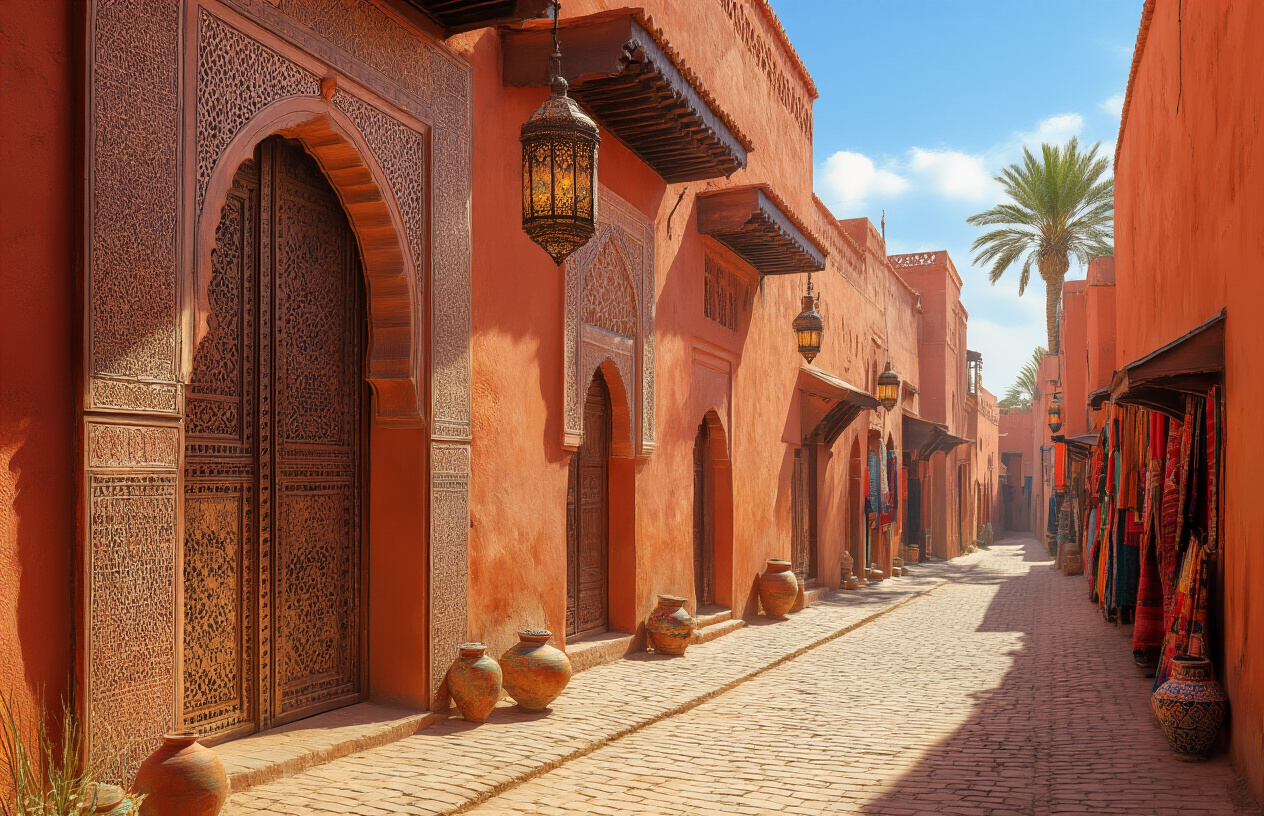
Navigate the Bustling Medina and Souks Like a Local
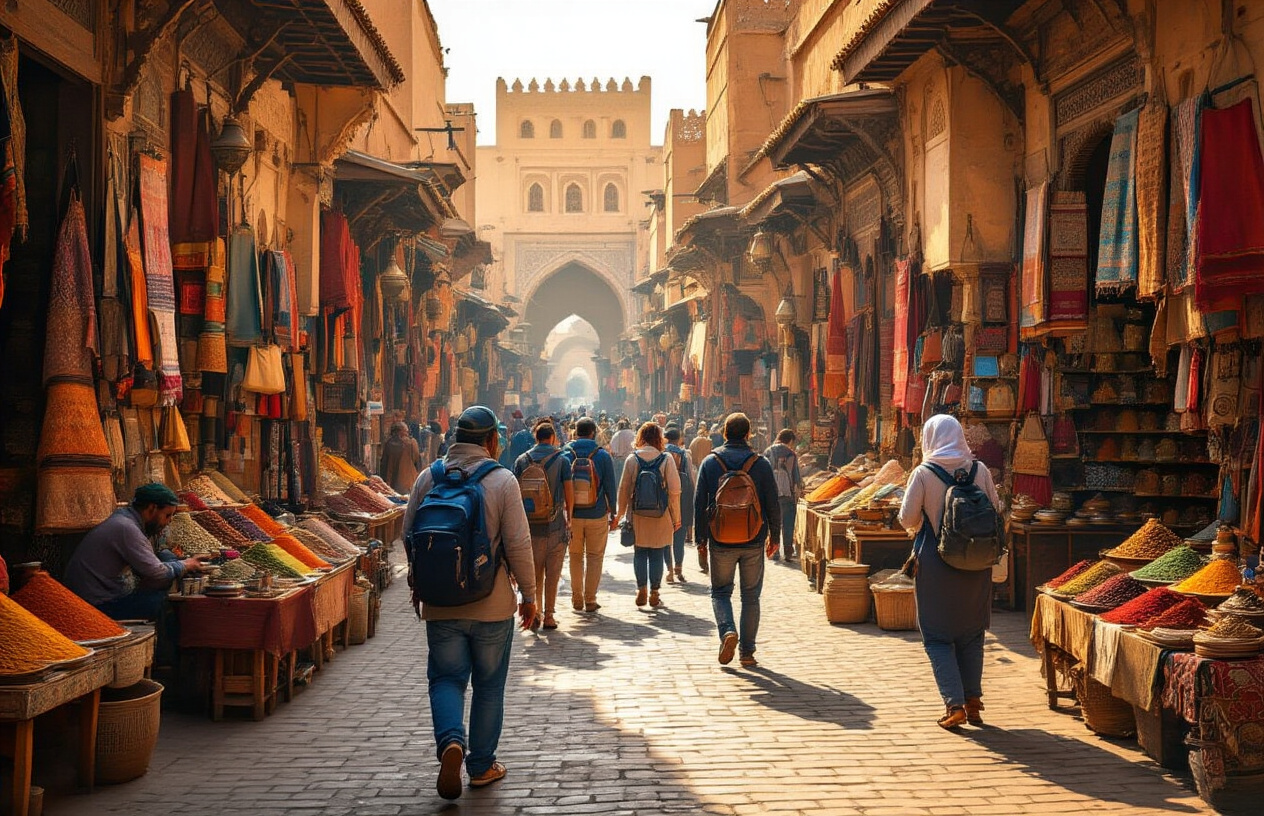
The medina of Marrakech feels like stepping into a living museum where centuries-old traditions pulse through narrow alleyways. Getting lost here isn’t just expected – it’s part of the magic. The trick to navigating these winding streets is to embrace the chaos while keeping a few landmarks in mind.
Start your souk adventure early in the morning when the light filters through the overhead lattework and vendors are setting up their stalls. The main arteries like Rue Semarine and Souk el Kebir serve as your navigation anchors, but the real treasures hide in the smaller offshoots. Follow the sounds – the rhythmic hammering leads to metalworkers, while the gentle whir of looms guides you to textile quarters.
Bargaining isn’t just shopping here; it’s social theater. Start by offering about 30% of the asking price and work your way up slowly. The seller expects this dance, so don’t feel awkward about it. Build rapport first – ask about their family or comment on their craftsmanship before diving into negotiations.
Watch for the subtle signs locals use: if a shopkeeper offers you mint tea, you’re getting closer to a fair price. Keep small bills handy and always agree on the final price before the vendor wraps your purchase.
Marvel at Architectural Wonders of Bahia Palace and Koutoubia Mosque
Bahia Palace stands as a masterpiece of Moroccan architecture, built in the late 19th century for Ahmed ibn Moussa, the grand vizier of Sultan Hassan I. The palace’s name means “brilliance,” and every inch lives up to this promise. Walking through its 160 rooms feels like discovering a new wonder around each corner.
The palace showcases the finest examples of traditional Moroccan design elements. Intricate zellige tilework covers the walls in geometric patterns that seem to shift and dance as you move through the rooms. Cedar wood ceilings feature hand-carved muqarnas that took master craftsmen years to complete. Each courtyard tells its own story through marble columns, painted stucco, and gardens filled with orange trees and date palms.
The Koutoubia Mosque dominates Marrakech’s skyline with its 253-foot minaret serving as both a spiritual beacon and navigation landmark. Built in the 12th century, this architectural marvel represents the pinnacle of Almohad design. While non-Muslims cannot enter, the exterior alone captivates visitors with its perfect proportions and subtle decorative details.
The minaret’s design influenced Islamic architecture across North Africa and Spain, including the famous Giralda in Seville. Visit during the evening call to prayer when the muezzin’s voice echoes across the city, creating an unforgettable spiritual moment.
Experience the Electric Atmosphere of Jemaa el-Fnaa Square
Jemaa el-Fnaa transforms throughout the day like a stage with ever-changing acts. During daylight hours, snake charmers play their flutes while cobras sway hypnotically, henna artists create intricate designs on tourists’ hands, and storytellers captivate audiences with animated tales in Arabic and Berber.
As the sun begins to set, the square undergoes its most dramatic transformation. Food stalls emerge from nowhere, filling the air with aromatic spices and grilling meat. The scent of tagines mingles with fresh bread and mint tea, creating an olfactory symphony that draws you deeper into the experience.
Evening brings street performers who turn the square into an open-air theater. Gnawa musicians play traditional instruments while dancers move to ancient rhythms. Drummers create infectious beats that make it impossible to stand still, and acrobats perform gravity-defying stunts that leave crowds cheering.
The best strategy for experiencing Jemaa el-Fnaa is to find a rooftop café overlooking the square during sunset. From this vantage point, you can watch the transformation unfold while sipping traditional mint tea. The view of the Atlas Mountains in the distance, combined with the bustling activity below, creates a perfect Marrakech moment.
Don’t miss trying street food from the evening stalls – the grilled meat skewers and fresh orange juice are legendary among locals and visitors alike.
Unwind in Traditional Riads and Hammam Spas
Riads offer an authentic Moroccan accommodation experience that hotels simply can’t match. These traditional houses, built around central courtyards, provide peaceful sanctuaries from the medina’s intensity. Original riads date back centuries, featuring architectural elements like carved plaster walls, colorful tiles, and rooftop terraces with stunning city views.
Modern riad owners have carefully restored these historic properties while adding contemporary luxuries. Expect to find swimming pools nestled in courtyards, libraries filled with books about Moroccan culture, and rooftop lounges perfect for watching the sunset over the medina’s red walls.
The hammam experience represents one of Morocco’s most cherished traditions. These traditional steam baths have served communities for over a thousand years, offering both physical cleansing and social connection. Public hammams provide authentic experiences where locals gather to relax and catch up on neighborhood news.
Private spa hammams in upscale riads offer a more luxurious version of this ancient ritual. The process typically begins with time in a steam room to open your pores, followed by an exfoliating scrub using black soap and rough mitts. A clay mask application comes next, concluding with a relaxing massage using argan oil.
Book your hammam session for late afternoon after a day of exploring the souks. The combination of steam, scrubbing, and massage will leave your skin incredibly soft while melting away the day’s stress and dust.
Exploring Fes: Morocco’s Cultural and Spiritual Heart
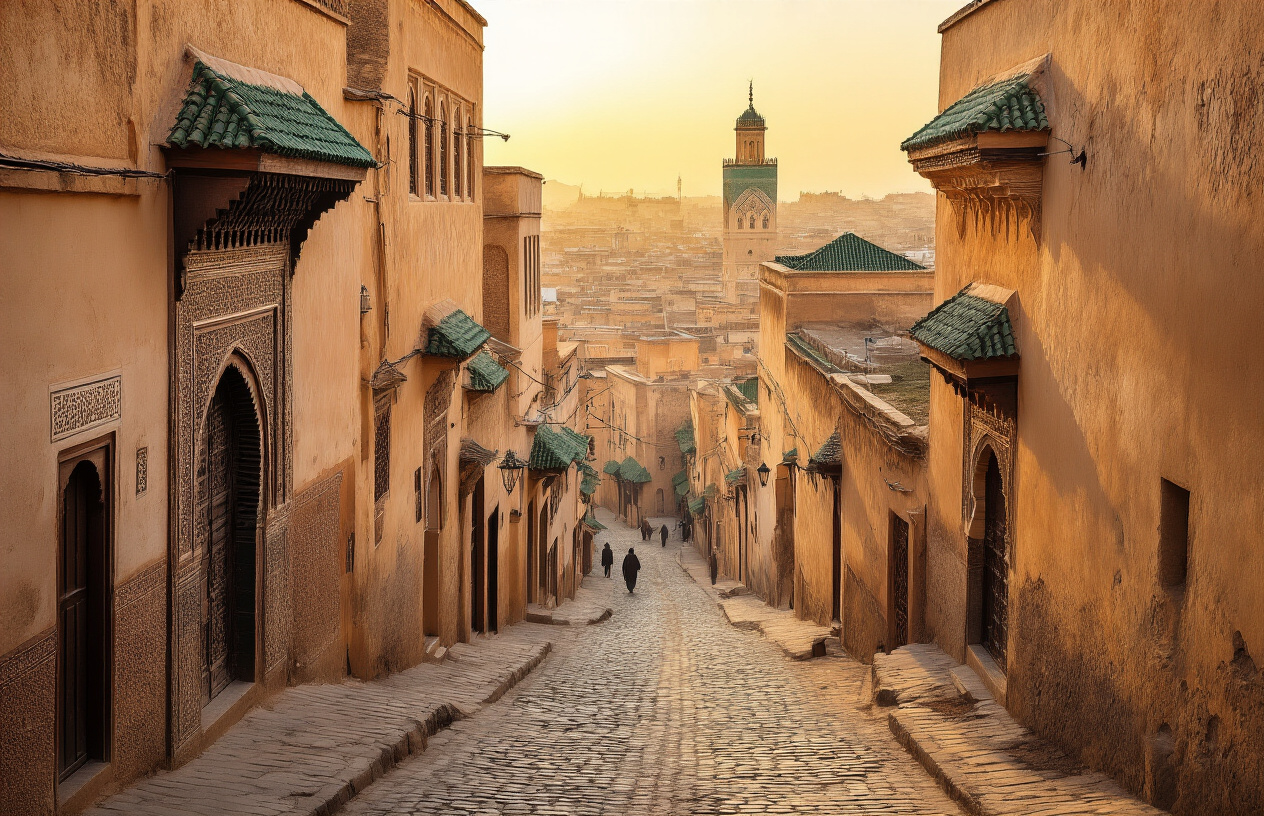
Journey Through the World’s Largest Car-Free Urban Zone
Stepping into Fes el-Bali feels like traveling back a thousand years. The medina stretches across 300 hectares of narrow alleyways, making it the world’s largest car-free urban area and a UNESCO World Heritage site that truly deserves its status. Here, donkeys and mules still carry goods through passages so tight that two people can barely pass each other.
The maze-like streets follow no logical pattern – they twist, turn, and branch off into countless directions. Getting lost isn’t just likely; it’s part of the authentic Fes experience. Local guides know every corner, shortcut, and hidden courtyard, but even they sometimes pause to get their bearings. The walls tower above you on both sides, creating a canyon effect that keeps the summer heat at bay while amplifying the sounds of daily life – children playing, merchants calling, and craftsmen hammering.
Every turn reveals something unexpected: a tiny mosque squeezed between shops, a fountain where locals fill their water jugs, or a sudden opening into a bustling square. The medina houses over 150,000 residents who live, work, and raise families within these ancient walls. Their daily routines create a living museum where authentic Moroccan culture thrives without any tourist facade.
Witness Ancient Craftsmanship at Traditional Tanneries
The Chouara Tannery offers one of Morocco’s most striking sensory experiences. From the viewing terraces above, you’ll look down into a honeycomb of stone vats filled with vibrant dyes – deep reds, rich yellows, and earthy browns that create a painter’s palette spread across the courtyard below.
Workers stand waist-deep in these pools, transforming raw animal hides into supple leather using techniques passed down through generations. They scrape, wash, and dye the skins by hand, just as their ancestors did centuries ago. The process starts with soaking hides in a mixture of cow urine, pigeon droppings, and quicklime – natural ingredients that remove hair and soften the leather.
The smell hits you immediately. Mint sprigs offered by tannery guides help mask the intense aroma, but the odor remains part of the authentic experience. These family-run businesses have operated in the same location for over 1,000 years, making them some of the oldest industrial sites still in use anywhere in the world.
| Leather Type | Primary Color Source | Typical Products |
|---|---|---|
| Goatskin | Saffron, henna | Bags, slippers |
| Sheepskin | Indigo, poppy | Jackets, poufs |
| Cowhide | Natural dyes | Belts, book covers |
Discover Al Quaraouiyine University and Religious Heritage
Founded in 859 CE by Fatima al-Fihri, Al Quaraouiyine University holds the Guinness World Record as the oldest continuously operating university on Earth. This wasn’t just an academic milestone – it was a revolutionary moment when a woman used her inheritance to create an institution that would educate scholars for over 1,200 years.
The university complex includes one of Morocco’s most important mosques, capable of holding 22,000 worshippers. Non-Muslims can’t enter the prayer halls, but you can peer through the massive doors to glimpse the forest of horseshoe arches and intricate geometric patterns that decorate the interior. The courtyard’s white marble fountains and detailed tilework showcase the peak of medieval Islamic architecture.
Students still attend classes here, studying Islamic law, theology, and Arabic literature using traditional teaching methods. The library houses over 4,000 manuscripts, including some of the oldest copies of the Quran in existence. These hand-written texts survived centuries of political upheaval, making Al Quaraouiyine a treasure trove of Islamic scholarship.
The surrounding streets buzz with religious schools called madrasas, each featuring stunning courtyards decorated with carved cedar wood, colorful tiles, and flowing Arabic calligraphy. The Ben Inania Madrasa stands out as the most elaborate, with its bronze doors and marble columns creating an atmosphere of scholarly devotion that has inspired students for generations.
Uncovering Meknes: The Forgotten Imperial Gem
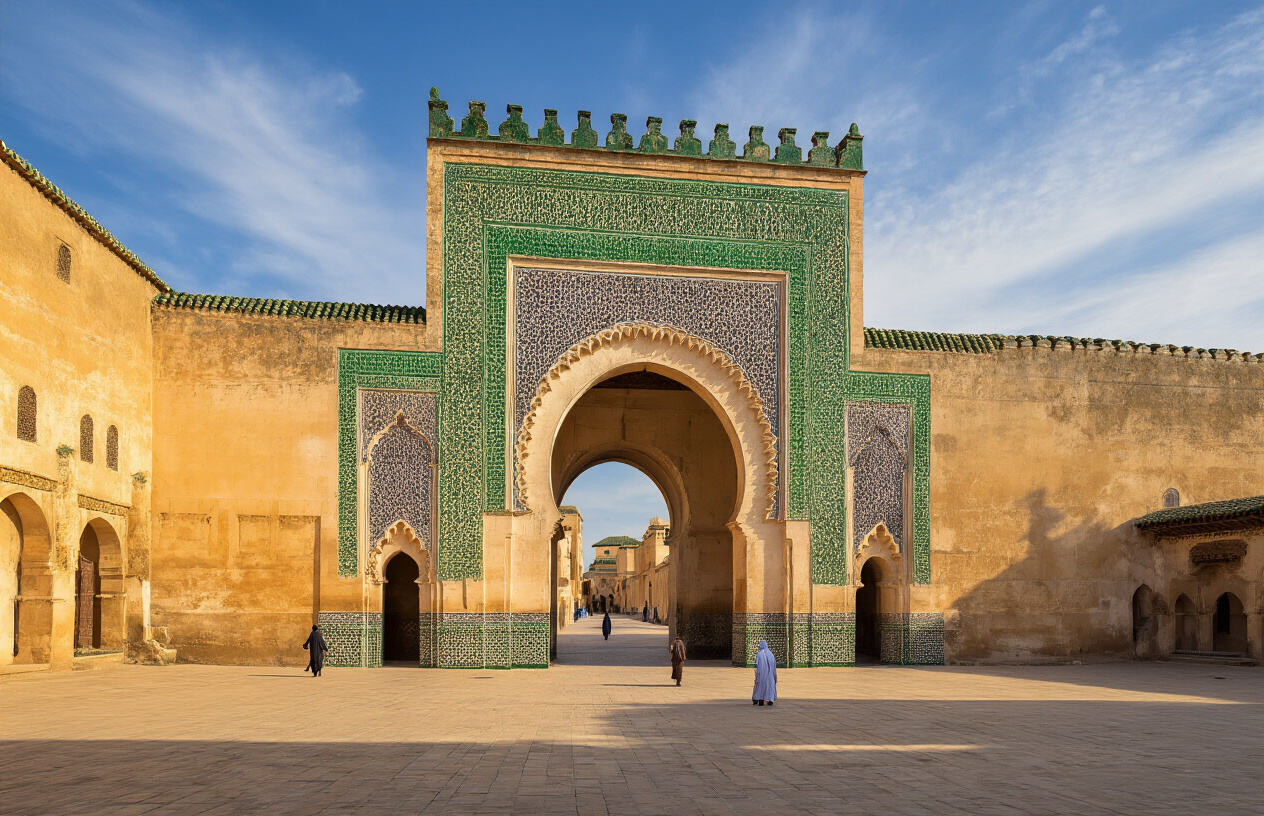
Explore Monumental Gates and Royal Granaries
Meknes greets visitors with Bab Mansour, arguably Morocco’s most spectacular gate. This 18th-century masterpiece showcases intricate geometric patterns and marble columns that shimmer in the afternoon sun. The craftsmanship here rivals anything you’ll find in Marrakech or Fes, yet you’ll likely have more space to appreciate the details without fighting through crowds.
Just beyond the gates, the Heri es-Souani granaries tell a fascinating story of Sultan Moulay Ismail’s ambitious vision. These massive underground chambers once stored grain to feed 12,000 horses for up to 20 years. Walking through these cool, cathedral-like spaces feels like stepping into a James Bond set. The engineering brilliance becomes clear when you notice the thick walls and clever ventilation system that kept grain fresh for decades.
The nearby stables showcase equally impressive architecture. These ruins housed the sultan’s legendary cavalry, and you can still imagine the thunder of hooves echoing through the arched corridors. Local guides share stories about how these horses were pampered better than most humans of the era.
Step Back in Time at Moulay Ismail’s Magnificent Palace
The Mausoleum of Moulay Ismail stands as Meknes’ crown jewel, offering one of the few opportunities for non-Muslims to enter a sacred Moroccan space. This stunning complex houses the tomb of the sultan who transformed Meknes into an imperial capital to rival Versailles.
Inside, marble floors reflect ornate chandeliers while zellij tilework creates mesmerizing patterns across every surface. The silence here feels profound, broken only by the soft footsteps of visitors and the occasional prayer. Guards dressed in traditional white robes add to the atmosphere, creating an almost theatrical experience.
The palace complex extends far beyond the mausoleum, though much remains in ruins. What survives gives glimpses of unimaginable grandeur. Massive walls, decorative pools, and fragments of ornate rooms hint at the opulence that once defined court life. Walking these grounds requires imagination, but the scale alone impresses.
Visit the Sacred Town of Moulay Idriss
A short drive from Meknes leads to Moulay Idriss Zerhoun, Morocco’s holiest town and a UNESCO World Heritage site. This whitewashed hillside settlement holds special significance as the burial place of Moulay Idriss I, who brought Islam to Morocco in the 8th century.
The town cascades down two hills like a white waterfall, creating one of Morocco’s most photogenic views. Narrow alleys wind between traditional houses, leading to viewpoints that overlook the surrounding olive groves and the ancient Roman ruins of Volubilis in the distance.
Every August, thousands of pilgrims converge here for the annual moussem (religious festival), transforming the quiet town into a vibrant celebration. Even during regular times, the spiritual energy feels palpable. Local families have maintained traditions for generations, and many residents can trace their lineage back to the Prophet Muhammad through Moulay Idriss I.
The town’s unique cylindrical minaret, the only one of its kind in Morocco, serves as a landmark visible from miles away. Climbing to the upper terraces rewards visitors with panoramic views that stretch across the Zerhoun Mountains.
Experience Authentic Moroccan Life Away from Tourist Crowds
Meknes offers something increasingly rare in Morocco’s imperial cities: authentic daily life proceeding naturally around visitors rather than being staged for them. Local markets bustle with residents buying vegetables, haggling over household goods, and conducting real business rather than tourist transactions.
The medina here feels lived-in rather than preserved. Families hang laundry from ancient walls, children play soccer in historic squares, and elderly men gather for tea and conversation in the same spots their fathers once occupied. This organic atmosphere makes every interaction feel genuine.
Coffee shops and restaurants cater primarily to locals, meaning better food at lower prices. Try pastries from neighborhood bakeries where recipes haven’t changed in decades, or join locals at tiny cafés where mint tea costs a fraction of tourist area prices.
Evening walks through residential neighborhoods reveal Morocco as locals experience it. The call to prayer echoes differently here, more personal and less performance-oriented. Families invite strangers to share meals with surprising frequency, especially during Ramadan when breaking the fast becomes a communal celebration.
This authenticity extends to shopping experiences. Artisans in Meknes work for local customers first, tourists second. This means higher quality craftsmanship and more reasonable prices, but also requires patience and basic Arabic or French phrases to navigate transactions successfully.
Experiencing Rabat: Morocco’s Modern Political Capital
Tour the Royal Palace and Government Districts
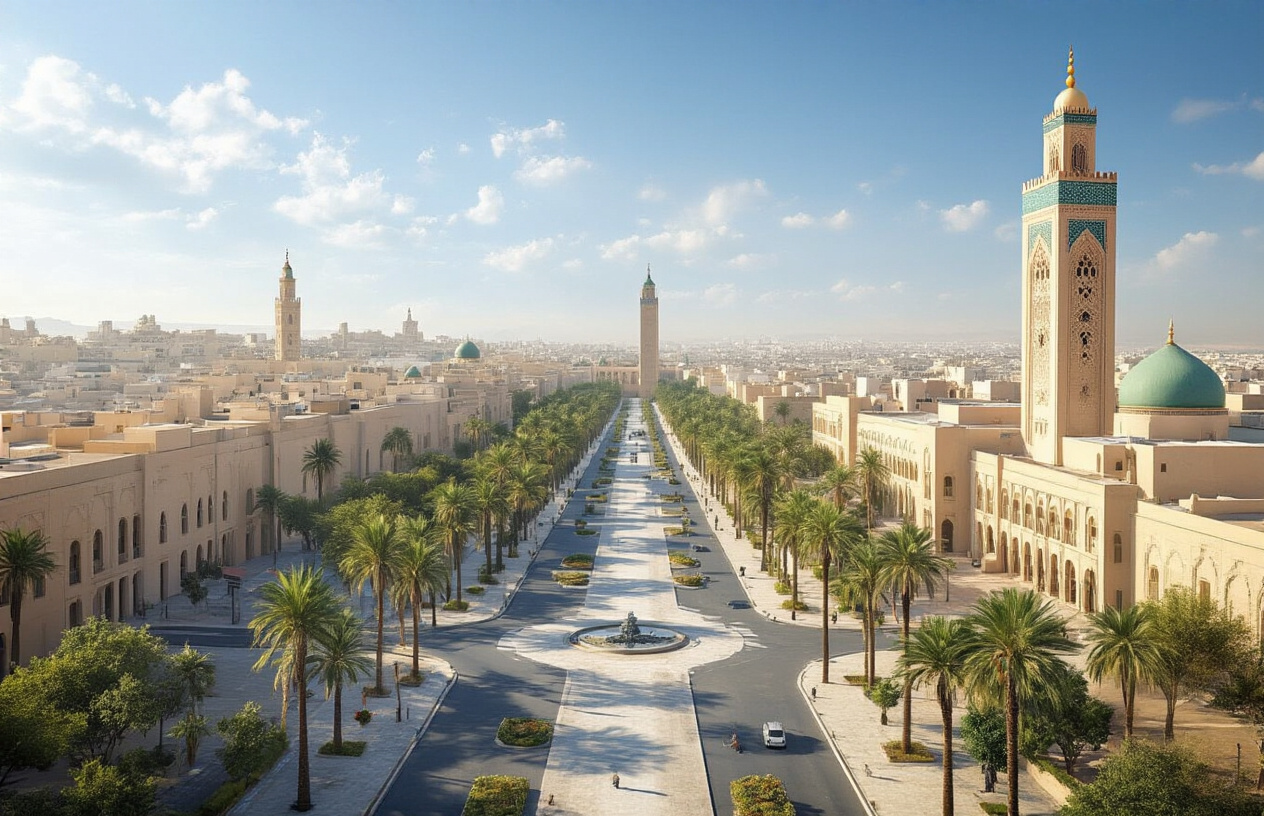
Rabat’s status as Morocco’s political capital becomes immediately apparent when walking through its administrative quarters. The Royal Palace, known as Dar al-Makhzen, sits behind impressive golden gates and high walls that speak to centuries of Moroccan monarchy. While the palace itself remains closed to public tours for security reasons, the surrounding area offers plenty to explore. The guards in their traditional red uniforms and the ceremonial changing of the guard create an authentic glimpse into Morocco’s living royal traditions.
The government district stretches beyond the palace grounds, featuring a fascinating blend of French colonial architecture and modern Moroccan design. Wide boulevards lined with palm trees connect various ministry buildings, each showcasing the country’s commitment to preserving architectural heritage while embracing contemporary needs. The Parliament building stands as a particularly striking example of modern Moroccan architecture, with its geometric patterns and traditional tile work incorporated into a thoroughly modern structure.
Climb Hassan Tower and Explore Mausoleum of Mohammed V
Hassan Tower represents one of Morocco’s most ambitious architectural projects from the 12th century. Sultan Yacoub al-Mansour envisioned this minaret as part of the world’s largest mosque, but construction stopped abruptly after his death in 1199. Today, the 44-meter tower stands surrounded by hundreds of marble columns that would have supported the mosque’s roof – creating an almost mystical forest of stone pillars that visitors can wander through freely.
Adjacent to the tower, the Mausoleum of Mohammed V houses the tombs of King Mohammed V and his sons, including the late King Hassan II. The mausoleum’s interior dazzles with intricate marble work, gold leaf decorations, and stunning geometric patterns that represent the pinnacle of Moroccan craftsmanship. Guards in traditional dress maintain a respectful atmosphere while allowing visitors to appreciate the artistry up close. The observation deck provides panoramic views across the Bouregreg River to Salé and the Atlantic Ocean beyond.
Stroll Through Picturesque Kasbah of the Udayas
The Kasbah of the Udayas perches dramatically on cliffs overlooking the Atlantic Ocean and Bouregreg River. This 12th-century fortress town feels like stepping into a different era, with narrow cobblestone streets winding between whitewashed houses adorned with blue accents. The Andalusian influence becomes obvious in the architecture and garden design, reflecting the area’s history as a refuge for Muslims expelled from Spain.
Walking through the kasbah reveals hidden courtyards, traditional riads, and local artisan workshops where craftspeople continue age-old traditions. The Andalusian Gardens offer a peaceful retreat with their geometric layout, orange trees, and fountain centerpieces. Café Maure, positioned at the kasbah’s edge, serves traditional mint tea with spectacular ocean views that make it the perfect spot to watch Atlantic sunsets while reflecting on the day’s discoveries.
Enjoy Coastal Views and Contemporary Art Scene
Rabat’s Atlantic coastline provides a refreshing contrast to the inland imperial cities. The Bouregreg Marina development represents Morocco’s vision for modern urban planning, featuring contemporary restaurants, shopping areas, and cultural spaces that blend seamlessly with the historic surroundings. The marina’s boardwalk offers perfect evening strolls with views of traditional fishing boats alongside modern yachts.
The Mohammed VI Museum of Modern and Contemporary Art showcases Morocco’s dynamic artistic evolution from the 20th century to present day. The museum’s rotating exhibitions feature both Moroccan and international artists, providing insight into how contemporary Moroccan culture engages with global artistic movements while maintaining distinct local character. Villa des Arts complements this scene with its focus on emerging artists and experimental works. The combination of coastal beauty and cultural sophistication makes Rabat unique among Morocco’s imperial cities, offering visitors a glimpse into the country’s future while honoring its remarkable past.
Maximizing Your Imperial Cities Experience
Transportation Options Between Cities
Getting between Morocco’s imperial cities offers several travel methods, each with distinct advantages. The train system connects Rabat, Casablanca, Meknes, and Fes through the ONCF railway network, providing comfortable air-conditioned cars and reliable schedules. High-speed trains between Rabat and Casablanca run frequently, while regular trains to Meknes and Fes take approximately 3-4 hours from Casablanca.
Private car hire or taxi services offer maximum flexibility for exploring at your own pace. Grand taxis (shared vehicles) operate between cities and cost significantly less than private options, though they wait until full before departing. CTM and Supratours buses provide budget-friendly alternatives with modern coaches and fixed schedules connecting all imperial cities.
For time-conscious travelers, domestic flights between Marrakech and Fes save considerable journey time. Road trips allow spontaneous stops at smaller towns like Ifrane or the Middle Atlas mountains between Fes and Meknes.
| Transportation | Cost Level | Travel Time | Flexibility |
|---|---|---|---|
| Train | Medium | 3-5 hours | Moderate |
| Private Car | High | 3-4 hours | Maximum |
| Grand Taxi | Low | 4-6 hours | Minimum |
| Bus | Low | 4-7 hours | Low |
| Domestic Flight | High | 1-2 hours | High |
Local Cuisine Must-Try Dishes in Each Destination
Each imperial city showcases unique culinary traditions reflecting their historical influences and local ingredients. Marrakech’s food scene centers around Jemaa el-Fnaa square, where street vendors serve fresh orange juice, escargot soup, and lamb mechoui roasted in underground ovens. The city’s signature dish, tanjia marrakchia, slow-cooks in traditional clay pots buried in hammam ashes overnight.
Fes claims Morocco’s most refined cuisine, with pastilla (phyllo pastry filled with pigeon, almonds, and cinnamon) originating here. The medina’s small restaurants specialize in rfissa (chicken with lentils and fenugreek) and the city’s famous olives. Traditional bread ovens throughout the old city create khubz (round flatbread) that residents collect twice daily.
Meknes offers exceptional regional wines and olive oil from surrounding agricultural areas. Local specialties include couscous with seven vegetables and lamb tagine with prunes and almonds. The city’s proximity to fertile plains means incredibly fresh produce appears in every meal.
Rabat’s coastal location brings excellent seafood options, particularly grilled sardines, sea bass, and prawns. The capital’s international influences create fusion restaurants while traditional spots serve chermoula-marinated fish and seafood pastilla variations.
Cultural Etiquette and Respectful Travel Practices
Respecting local customs enhances your experience while showing appreciation for Moroccan culture. Dress modestly, particularly when visiting mosques, religious sites, or conservative neighborhoods. Long pants and covered shoulders work well for both men and women, with women benefiting from loose-fitting clothing that covers arms and legs.
Photography requires sensitivity and permission. Never photograph people without asking first, especially women, elderly individuals, or anyone in traditional dress. Many locals appreciate small tips for photos, typically 5-10 dirhams. Avoid photographing military installations, government buildings, or police.
Religious practices deserve special consideration. During prayer times (five daily calls), allow extra time for travel as shops may close temporarily. During Ramadan, eating, drinking, or smoking publicly during daylight hours shows disrespect. Friday prayers see increased activity around mosques.
Haggling represents cultural tradition in markets and souks, but approach it respectfully. Start at roughly one-third the asking price and negotiate gradually. Accept mint tea offers graciously – refusing seems rude. Use your right hand for eating, greeting, and exchanging money, as the left hand is considered unclean.
Tipping (baksheesh) is customary for services. Restaurant servers typically receive 10-15%, while small amounts work for bathroom attendants, parking assistants, and helpful locals providing directions. Learning basic Arabic greetings like “As-salamu alaikum” and “Shokran” (thank you) demonstrates respect and often receives warm responses from locals.
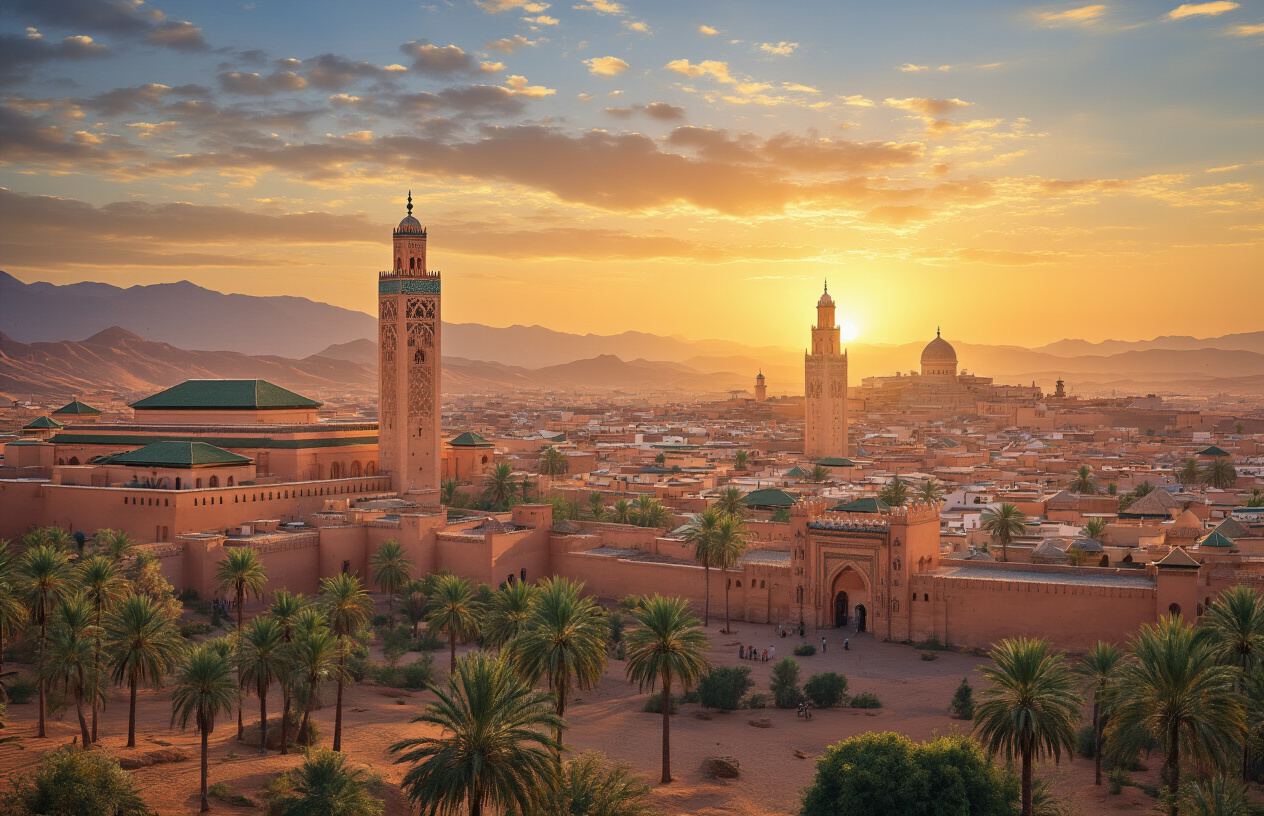
Morocco’s four imperial cities each tell a unique chapter of the country’s rich history. From Marrakech’s bustling souks and vibrant energy to Fes’s ancient medina and spiritual depth, each destination offers something special. Meknes surprises visitors with its relaxed atmosphere and stunning architecture, while Rabat balances historical significance with modern sophistication. Together, these cities create a complete picture of Morocco’s evolution from ancient kingdoms to today’s dynamic nation.
The best way to experience these imperial treasures is to embrace both the planned and spontaneous moments of your journey. Take time to wander through the medinas, chat with local artisans, and savor traditional meals in family-run restaurants. Book your accommodations in advance, especially in popular areas, but leave room in your schedule for unexpected discoveries. This tour isn’t just about checking famous sites off a list – it’s about connecting with Morocco’s living history and creating memories that will last long after you return home.