Solo Trekking in Morocco: Why the High Atlas Should Be Your Next Adventure
There’s a particular kind of quiet that settles over you on a mountain trail in Morocco — not the silence of emptiness, but the hum of a place that’s been alive for centuries. Mule bells clinking somewhere below. Wind moving through walnut trees. A shepherd’s whistle echoing between valley walls. If you’ve been thinking about trekking solo in Morocco, this is what’s waiting for you.
Morocco has quietly become one of the best places in the world for a solo trekking trip, and it’s not hard to see why: North Africa’s highest peak, centuries-old Berber villages, a well-worn trekking infrastructure, and all of it within a couple of hours of Marrakech.
Here’s everything you need to know to plan your own trip.
Unlike more remote trekking destinations, Morocco makes solo travel genuinely easy. Guesthouses and mountain refuges along the main routes have shared dorm-style rooms, which means you’re rarely trekking in true isolation — you’ll cross paths with other travellers over dinner even if you spend your days walking alone. The trails around Imlil are well-established, guides are affordable and easy to arrange on short notice, and the region has hosted foreign trekkers for decades. Hence, the logistics are far more forgiving than people expect.
Where to Go:
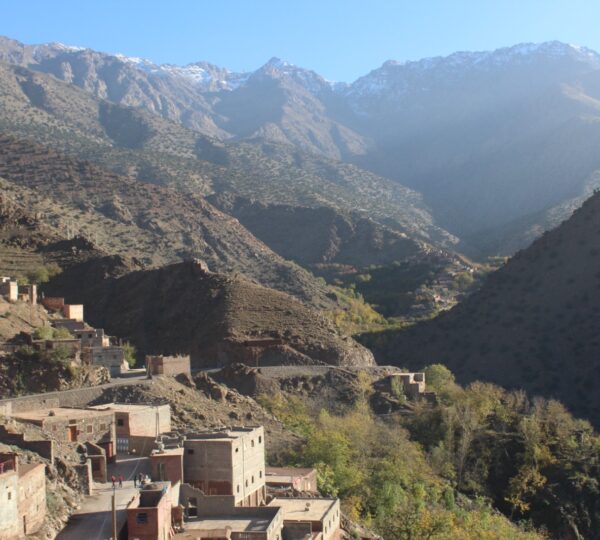
Imlil and the Toubkal region is the natural starting point for almost everyone. It’s about 90 minutes from Marrakech by grand taxi, and it’s the launch pad for treks to Jebel Toubkal, North Africa’s highest peak at 4,167 meters. One important thing to know: international hikers in Toubkal National Park have been required to trek with a licensed local guide since 2018, both to support the local economy and for safety on the more technical sections. This isn’t a bureaucratic hurdle — it’s genuinely useful, since a local guide will help you navigate unmarked trails, interpret the culture, and provide a level of safety that’s hard to replicate on your own.
Ourika Valley is the gentler alternative, and a great option if you want a taste of the mountains without committing to a summit push. Expect fruit orchards, walnut groves, terraced fields, hidden waterfalls, and traditional Berber homes ideal for day hikes or a light multi-day itinerary.
Aït Bougmez and the M’Goun Massif in the Central High Atlas are where to go if you want the version of this trip with almost no other tourists. The M’Goun Circuit follows old routes of the nomadic Ait Atta tribes as they move toward glacial lakes and summer pastures, and the M’Goun Traverse — a roughly 50km route — climbs to Morocco’s fourth-highest summit at 4,071 meters. This is a more serious undertaking, best done with a guide who knows the terrain.
When to Go:
Timing matters more than almost anything else in planning a Morocco trek. Spring (March–May) and autumn (September–October) offer the most favourable conditions, with milder temperatures and clearer skies for taking in the views toward the Sahara. Outside that window:
– Summer is workable but hot in the valleys — temperatures in Morocco’s lowlands can climb into the 100s°F, though the High Atlas stays roughly 10–15°C cooler.
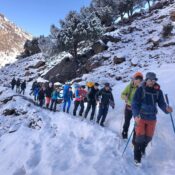
– Winter (November–February) brings snow above roughly 2,000 meters, and a winter summit of Toubkal is a different proposition entirely — it requires basic winter mountaineering skills, not just fitness.
What to Pack:
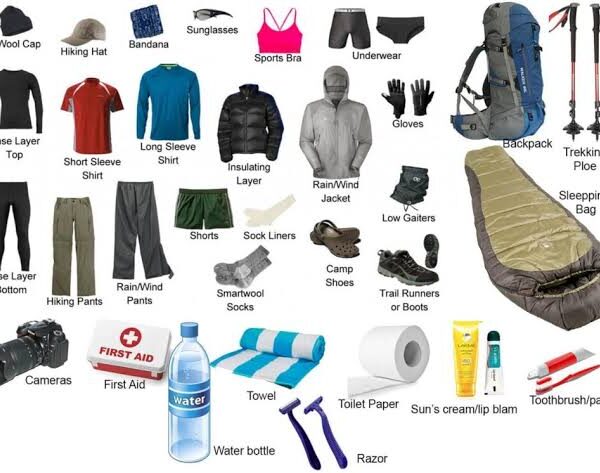
Mountain weather in the Atlas swings hard between day and night, and even between sun and shade. Expect it to drop below freezing even when the valley below feels warm, so layering isn’t optional. A solid packing list looks like:
– A moisture-wicking base layer, insulating mid-layer, and a proper windproof/waterproof shell
– Broken-in, high-quality hiking boots — not trail runners, especially for anything above 3,000m
– A good headlamp (mornings on summit pushes often start around 4 am)
– Gloves and a warm hat, even outside winter
– A refillable water system and water purification method
– Sun protection — the altitude and reflection off rock make this more important than it looks
Staying Safe While Trekking Alone:
Trekking solo doesn’t mean trekking unsupported, and the two things worth taking seriously are altitude and communication.
Acclimatise deliberately. The most effective way to prevent altitude sickness is to ascend slowly and give your body time to adjust. If you’re pushing for Toubkal’s summit, most itineraries build in a night at the Toubkal Refuge (3,207m) before the final push — don’t skip this to save a day.
Tell someone your plan. Always let your accommodation know your planned route and expected return time, and if you’re trekking a stretch without a guide, carry a whistle or signal mirror in case you need to attract attention.
Hire a guide for anything technical. Beyond the legal requirement in Toubkal National Park, a guide is simply the most efficient way to trek safely in terrain where most rural residents don’t speak foreign languages and trails often aren’t marked. Guides typically run from roughly €60 to €150 per person per day, depending on the level of comfort and service.
Where You’ll Sleep:
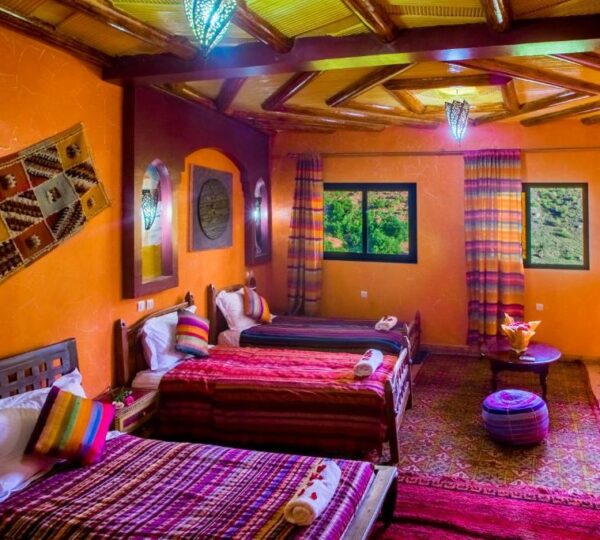
Accommodation along the main routes ranges from simple to genuinely comfortable:
Mountain refuges and gîtes — basic, shared dorm-style rooms, often the social heart of a trek. The Toubkal Refuge is a classic example: around 130 dirhams (about €12) a night, with online booking required from May through September because it fills up fast.
– Village guesthouses — family-run homes with a few extra beds, common in valleys like Aït Bougmez, where there’s often no online booking system at all — you arrange things through your guide or on arrival.
– Kasbahs and boutique lodges — for a few nights of comfort before or after the trek, particularly around Asni and the Ourika Valley.
One nice thing for solo travellers specifically: single-room surcharges are typically only an issue in Marrakech hotels — most mountain accommodation is dorm-style by default, so you won’t be paying a solo penalty on the trail itself.
The Part That Isn’t on Any Packing List:
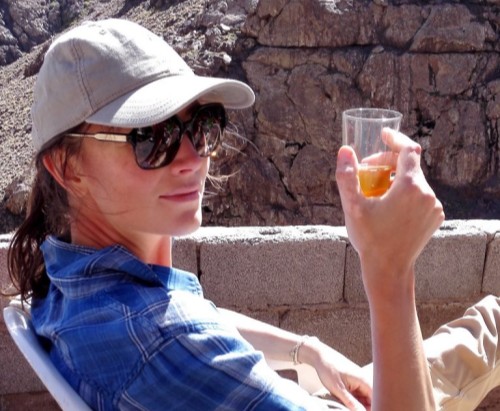
Ask people who’ve done this trek what actually stayed with them, and it’s rarely the summit photo. It’s the mule train hauling supplies to a village with no road access. The unplanned invitation for mint tea — locally nicknamed “Berber whisky” — in someone’s home. The whistle language some Berber shepherds still use to communicate across valleys. Trekking alone here doesn’t mean being alone; it means having the space to actually notice all of this, at your own pace, without anyone else’s itinerary competing for your attention.
Morocco rewards trekkers who come prepared but stay open — pack the layers, hire the guide when the terrain calls for it, and leave room for the parts of the trip you can’t plan for.
Planning your route? Start in Marrakech, base yourself in Imlil for the Toubkal region, and build in at least one buffer day — mountain weather in the Atlas rarely reads the itinerary.